



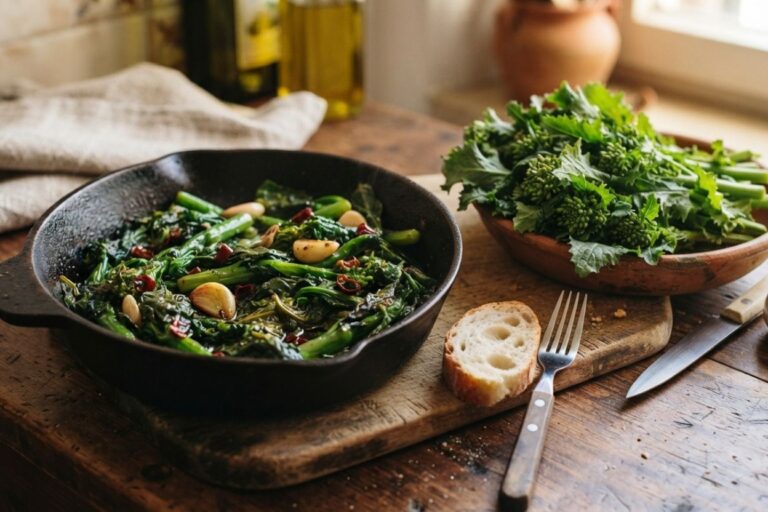
Understanding Friarielli and Its Botanical Identity
The culinary landscape of southern Italy features various unique ingredients. Few items command as much local devotion as friarielli. Originating from the volcanic soils surrounding Naples, this distinct green vegetable forms an integral part of Campania’s gastronomic heritage. Botanically classified under the species Brassica rapa, friarielli consists of tender leafy tops and delicate flower shoots harvested before they fully bloom.
Discussions regarding this green often lead to confusion with other Mediterranean produce due to regional naming conventions. In Puglia, growers and cooks refer to the plant as cime di rapa. Meanwhile, central Italian regions like Lazio label similar variants as broccoletti. International markets introduce further terminology. They sell the vegetable under names such as broccoli rabe, rapini, or turnip tops. However, true Neapolitan friarielli maintain a specific culinary reputation. Their unique balance of texture and flavor separates them from harsher or leafier iterations found elsewhere.
The flavor profile of friarielli is defined by a pronounced earthy bite. This profile also includes an assertive bitterness. Rather than overpowering a recipe, this bitterness serves a specific purpose in traditional cooking. When paired with rich, fatty, or sweet ingredients, the sharp notes of the vegetable cut through heavy elements. Consequently, this creates a balanced and satisfying plate.
Botanical Characteristics of Friarielli
Botanists study the unique growth patterns of this plant closely. The plant thrives in cooler months. Frost often enhances the natural sugars within the leaves. Therefore, winter harvests yield the most flavorful crops. The leaves feature a slightly serrated edge. Small buds cluster tightly at the center of the stem. These buds provide the characteristic crunch that chefs value so highly in traditional dishes.
Regional Variations Across Italy
Italy showcases immense culinary diversity from north to south. While friarielli dominates Neapolitan kitchens, travelers encounter similar plants across the peninsula. Tuscany features cavolo nero, while Lombardy embraces various brassicas. However, true friarielli remain distinctly tied to the volcanic terroir of Mount Vesuvius. The mineral-rich earth imparts a flavor that sandy or clay soils simply cannot replicate.
Traditional Preparation and Cooking Methods
Mastering the preparation of friarielli requires adherence to time-honored techniques. Home kitchens and trattorias across Naples have perfected these methods over generations. The etymology of the word stems from the local dialect verb frijere. This translates directly to fry or pan-sauté. This descriptor highlights that the vegetable is rarely boiled or consumed raw. Instead, cooks transform the greens through direct contact with hot oil, garlic, and chili.
The cleaning process requires separating the delicate florets and young leaves from any thick, fibrous stalks. Discarding woody stems ensures a tender mouthfeel once cooked. However, very young stalks can remain intact. After washing the greens thoroughly, home cooks traditionally leave a small amount of residual moisture clinging to the leaves. This water content plays a vital role during the initial stage of cooking.
Step-by-Step Stovetop Technique
- Pour a generous amount of extra-virgin olive oil into a deep, wide skillet.
- Gently crush whole cloves of garlic, leaving the skins on for a milder aromatic release, and add a dried chili pepper.
- Warm the oil over medium heat until fragrant, taking strict care never to let the garlic turn golden-brown or burn.
- Introduce the damp friarielli directly into the pan, tossing them quickly to coat them in the flavored oil.
- Cover the pan immediately with a tight-fitting lid. Allow the greens to steam in their own released moisture for roughly five minutes.
- Remove the lid, raise the heat slightly, and stir occasionally as the remaining liquid evaporates completely.
- Continue cooking until the leaves soften and develop slight, savory char marks at the edges.
- Season with salt strictly at the very end of the cooking process to prevent the greens from releasing excess water prematurely.
Common Mistakes to Avoid in the Kitchen
Many novice cooks struggle with bitterness when handling friarielli. However, proper preparation eliminates harsh flavors. Avoid boiling the greens for extended periods. Boiling leaches away valuable nutrients and alters the desirable texture. Furthermore, never add salt at the beginning of the sautéing process. Salt draws out moisture too quickly, causing the vegetable to steam indefinitely rather than frying correctly.
Classic Pairings and Culinary Applications
The versatility of friarielli shines brightest when combined with specific proteins and pantry staples. These items complement its distinct character remarkably well. The most famous union in Neapolitan food culture is salsiccia e friarielli. This classic dish pairs the bitter green with rich, spiced pork sausage.
When preparing this combination, cooks often brown fresh pork sausages directly in the skillet first. The rendered pork fat coats the bottom of the pan. This provides a savory medium in which the friarielli subsequently cook. The greens absorb the spiced juices of the meat. Ultimately, this creates a harmonious blend where the fat softens the bitter edges of the vegetable. Meanwhile, the vegetable cuts through the heaviness of the pork.
Pizzeria Traditions in Naples
Pizzerias across Naples showcase friarielli prominently on white pizza variations. Traditional kitchens omit tomato sauce entirely on these specialty pies. A typical Neapolitan pizza features a base of stretched dough topped with fresh fior di latte mozzarella. Cooks then add crumbled pork sausage and a generous layer of pre-cooked friarielli. As the pizza bakes intensely in a wood-fired oven, the juices mingle with the melted cheese. This process yields an iconic regional masterpiece.
Incorporating Friarielli into Pasta Dishes
Pasta dishes also benefit immensely from the addition of friarielli. Short pasta shapes like orecchiette hold small pockets of the vegetable effortlessly. Chefs combine the greens with crushed garlic, high-quality olive oil, and occasionally anchovy fillets melted down in the pan. For an alternative texture, cooks toss toasted breadcrumbs flavored with lemon zest over the finished pasta dish. This addition provides a crisp crunch that contrasts beautifully against the tender greens.
Nutritional Profile and Health Benefits
Beyond its celebrated taste, friarielli offers a dense matrix of vitamins and minerals. These compounds are common among cruciferous vegetables. Regular consumption of these dark leafy greens contributes significantly to daily nutritional intake without adding excessive calories. Therefore, fitness enthusiasts and health-conscious eaters embrace the ingredient willingly.
The nutritional composition includes several key elements:
- Vitamins A, C, and K: Essential micronutrients that support immune function, promote skin health, and aid in proper blood coagulation.
- Dietary Iron and Folate: Important elements for cellular development and oxygen transport throughout the body.
- Antioxidants and Glucosinolates: Plant compounds associated with reducing oxidative stress and supporting long-term cellular health.
- Dietary Fiber: Promotes healthy digestive tract function and helps maintain sustained energy levels throughout the day.
Supporting a Balanced Lifestyle
The presence of fiber and micronutrients makes friarielli a valuable addition to balanced dietary patterns. Incorporating these greens into weekly meal plans supports overall wellness. Furthermore, the intense regional flavor ensures that healthy eating never feels like a chore. Whether served as a simple side dish or integrated into complex mains, the vegetable delivers substantial health rewards.
Availability, Purchasing Formats, and Modern Storage
Historically, access to fresh friarielli remained limited strictly to the winter harvest season. This season runs roughly from late autumn through early spring when colder temperatures enhance the sweetness of the plant. However, modern culinary supply chains have successfully expanded availability. Consequently, kitchens and home cooks worldwide now enjoy the ingredient year-round.
Selecting and storing the produce requires different approaches depending on the format. Consumers choose between fresh bunches, frozen packages, and preserved options. Each format serves a unique purpose in modern cooking.
Fresh Greens vs. Processed Options
Fresh bunches require careful inspection at the market. Look for vibrant green leaves showing no signs of yellowing or wilting, accompanied by firm stems. Store fresh bunches unwashed in a breathable bag inside the refrigerator crisper drawer. Consume them within a few days for optimal flavor.
Alternatively, flash-frozen friarielli retain their structural integrity and bright color effectively. These options require zero trimming or washing. Cooks transition them straight from the freezer into a hot skillet for quick preparation. Meanwhile, glass jars or tins containing friarielli packed in oil offer ultimate convenience for busy pantries. Because these versions are typically pre-cooked during packaging, they only require a brief warming phase in a pan before incorporation into sandwiches, pizzas, or pasta dishes.
