



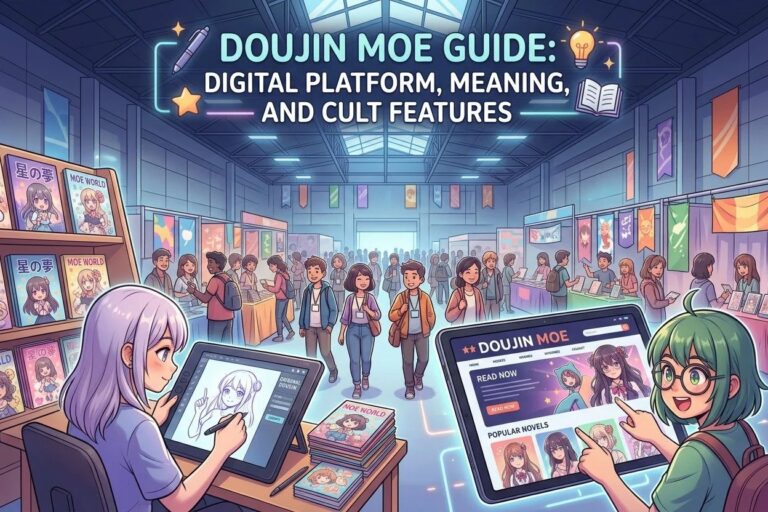
Understanding the world of Japanese self-published media involves navigating unique cultural terminology, community conventions, and online reading portals. Within this ecosystem, doujin moe serves as both a cultural concept and a prominent term associated with online manga and light novel discovery platforms. This comprehensive guide details the precise meaning of doujin moe, its roots in otaku subculture, the digital platforms linked to the name, and key considerations regarding safety and copyright.
Defining Doujin Moe and Its Cultural Roots
To understand doujin moe in its complete context, one must analyze the two distinct Japanese words that form the phrase. Each word represents a core element of modern Japanese media and fan culture. Together, they create a powerful creative framework that continues to influence global entertainment.
What Does Doujin Mean in Japanese Culture?
The term doujin refers to a group of like-minded individuals who gather to pursue a shared interest, goal, or creative passion. In the world of Japanese publishing, independent creators form small self-publishing groups called circles. These circles produce independent works, known as doujinshi, which span across various media formats:
- Self-Published Manga: Fan-made or original comic books printed outside standard commercial publishing channels.
- Independent Games: Video games developed by small indie teams or solo creators, often showcased at conventions.
- Music and Audio Works: Original soundtracks, arrangements, and voice dramas produced for niche communities.
- Light Novels and Prose: Short stories and long-form web novels written and distributed independently.
Deciphering the Moe Aesthetic and Style
The word moe is a popular Japanese slang term describing feelings of deep affection, visual appeal, or attachment toward fictional characters. It emphasizes specific character traits, expressive art styles, and emotional tropes that resonate strongly with readers. Therefore, when combined into a single phrase, doujin moe describes independent, fan-made works that center heavily around character-driven storytelling, charming visual art styles, and expressive character dynamics.
The Historical Evolution of Doujin Moe Publishing
The self-publishing movement in Japan did not appear overnight. Instead, it grew through decades of passionate fan organization, creative experimentation, and community gatherings.
Early Days of Independent Fan Circles
During the 1970s, passionate artists began forming small groups to share their love for specific anime shows. Furthermore, these early creators printed simple booklets using basic mimeograph machines. Consequently, they established the foundational network for independent publishing.
As technology improved, these small circles began producing higher quality fan magazines. Soon, thousands of fans began meeting at small community halls to trade their printed books.
The Rise of Major Fan Conventions
By the 1980s and 1990s, the popularity of independent publishing skyrocketed. As a result, events like Comic Market, commonly known as Comiket, expanded into massive international conventions. Today, hundreds of thousands of attendees gather to purchase exclusive works featuring doujin moe styles directly from creator circles.
Doujin Moe as an Online Reading Destination
Beyond its cultural definition, doujin moe is widely recognized online as an index title for web-based reading platforms and aggregation portals. Readers seeking independent comics, fan translations, and light novels frequently encounter sites using this branding.
Content Offerings on Digital Aggregators
Platforms associated with doujin moe index a broad range of digital publications for global online audiences:
- Translated Light Novels: Fan-translated and community-curated web novels across genres like fantasy, slice-of-life, and isekai.
- Fan-Made Manga (Doujinshi): Self-published comic stories based on popular commercial anime, gaming, and manga franchises.
- Original Indie Works: Fully original self-published material created by independent artists and authors looking for direct reader exposure.
- Niche Fiction: Specialized narrative genres catering to specific community interests and character archetypes.
How Digital Libraries Source Content
Digital libraries source their stories through community submissions and public aggregation methods. For example, volunteer scanlation teams work tirelessly to translate original Japanese text into English. In addition, these groups edit dialogue bubbles and re-draw graphics to make stories accessible worldwide.
Core Features of Doujin Moe Reading Platforms
Online reading interfaces connected to the doujin moe name generally focus on user convenience, comprehensive archiving, and streamlined search structures.
Categorization and Detailed Tagging Systems
Most digital repositories organize their archives using detailed tag systems. As a result, readers can filter content by genre, character tropes, original artist circles, release date, or language translation status. This organized indexing makes finding specific titles straightforward for long-time enthusiasts who know exactly what they want to read.
User Experience and Custom Reader Interfaces
Platform interfaces are designed for seamless visual consumption across desktop browsers and mobile devices. In fact, web developers build these sites with lightweight code to ensure fast loading times. Key visual features include:
- Clean Page Viewers: Strip-view or single-page reading layouts optimized for manga panel transitions.
- Bookmark Management: Custom reading lists that allow registered or anonymous readers to track ongoing story chapters.
- Search Functionality: Keyword search bars capable of recognizing original Japanese titles, translated names, and specific artist handles.
Understanding the Creation Process Behind Doujin Moe
Creating independent manga and light novels requires immense dedication, artistic skill, and storytelling ability. Unlike commercial artists with large editorial teams, independent creators often manage every step of production by themselves.
Writing and Storyboard Planning
First, an artist drafts the foundational script and plans out panel layouts. In addition, creators design character sheets to ensure consistent visual aesthetics across all pages. Furthermore, writers outline plot beats to deliver maximum emotional impact within a limited page count.
Inking, Lettering, and Final Printing
Next, the artist inks the penciled panels, adds tone sheets, and inserts dialogue text. Subsequently, creators send their completed digital files to specialized printing houses that cater to independent circles. Finally, the finished physical copies arrive in boxes, ready for distribution at conventions or online storefronts.
Safety, Legality, and Creator Support
While aggregator websites offer broad accessibility, users navigating platforms connected to doujin moe should understand the operational and legal context of these services.
Navigating Aggregator Safety and Digital Protection
Third-party reading platforms often rely on automated advertising networks for server maintenance. Therefore, visitors should take basic digital precautions when accessing mirror domains or third-party libraries:
- Ad-Blocking Tools: Utilize verified browser extensions to prevent intrusive pop-up advertisements or unexpected URL redirects.
- Avoid Unverified Software: Do not download external executable files or unknown browser extensions claiming to improve reading performance.
- Data Privacy: Refrain from entering sensitive personal or financial information on unverified aggregator domains.
Supporting Independent Creators Directly
Independent authors and artist circles depend on direct support to continue producing high-quality work. Fortunately, readers who discover creators on doujin moe portals can support them through official commercial avenues:
- Official Digital Bookstores: Purchasing licensed digital editions through recognized online booksellers.
- Crowdfunding Platforms: Supporting artist circles directly through creator subscription services and fan support portals.
- Physical Convention Purchases: Buying physical copies directly during major fan conventions like Comic Market in Japan.
The Impact of Doujin Moe on the Mainstream Anime Industry
The influence of doujin moe extends far beyond independent convention halls. Surprisingly, the mainstream Japanese entertainment market relies heavily on talent discovered within the self-publishing scene.
A Breeding Ground for Professional Talent
Many famous manga artists, illustrators, and voice actors began their careers in small independent circles. Commercial publishers regularly scout convention halls to discover rising stars who already possess strong drawing skills and established fan bases. Consequently, self-publishing acts as a major talent incubator for the broader entertainment industry.
Artistic Freedom and Narrative Innovation
Because independent creators do not answer to commercial editors, they enjoy total creative freedom. Thus, artists can experiment with unconventional storylines, unique character pairings, and bold visual styles. Additionally, this artistic freedom drives innovation across the entire manga and anime ecosystem.
Summary of the Doujin Moe Phenomenon
The phrase doujin moe bridges the gap between traditional Japanese fan publishing and modern online reading communities. Whether viewed as an expression of character-focused creative independence or as an online index for community-translated fiction, it remains a notable touchstone for digital readers worldwide. By combining an understanding of its cultural origins with smart online safety habits, readers can explore independent fiction while continuing to support original creators effectively.
