
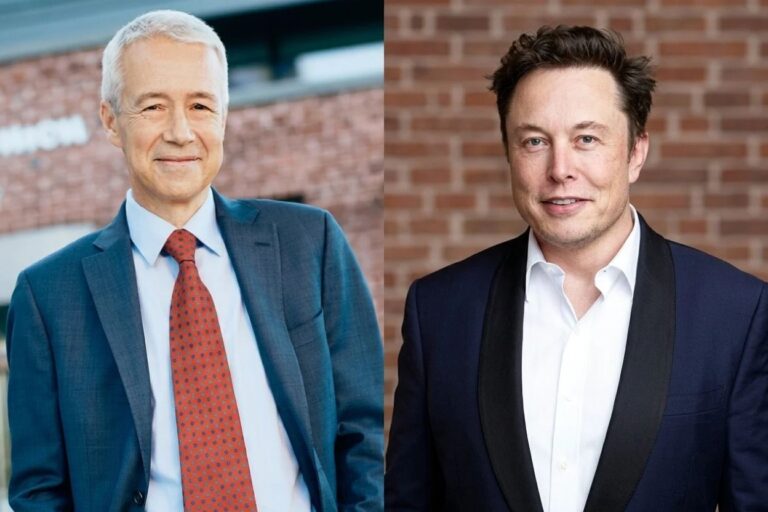
Joaquin Duato and Elon Musk are two prominent business executives whose professional careers represent different areas of modern innovation. One has built his reputation in the healthcare industry, while the other has become widely known for developing technology businesses across transportation, aerospace, and artificial intelligence. Although their professional responsibilities are different, their careers provide an interesting look at how leadership and innovation influence major international companies.
Joaquin Duato serves as Chairman and Chief Executive Officer of Johnson & Johnson. His experience includes pharmaceutical management, international business operations, medical research, and corporate strategy. He joined the organization in 1989 and gradually moved into senior executive positions. His leadership now focuses on strengthening the company’s position in innovative medicine and medical technology.
Elon Musk has followed a different professional route. He is associated with Tesla, SpaceX, Neuralink, and other technology ventures. His projects involve electric transportation, reusable rockets, artificial intelligence, and advanced engineering. He has become a central figure in discussions about how technology could change everyday life and industrial development.
There is no publicly confirmed personal partnership or joint business venture between these executives. Their connection is primarily a subject for professional comparison, particularly when discussing innovation, leadership, and the influence of technology on different industries.
Understanding Joaquin Duato and Elon Musk means looking at their individual backgrounds, career decisions, business achievements, and future responsibilities. Their stories also show why different leadership approaches are necessary in industries with different challenges.
Joaquin Duato: Background, Education, and Early Career
Joaquin Duato is a Spanish-American business executive who has spent most of his professional career working in the healthcare sector. His experience at Johnson & Johnson covers several business areas, including pharmaceuticals, international operations, corporate management, and technology. Over the years, he developed a strong understanding of how a global healthcare organization operates.
Unlike entrepreneurs who establish businesses independently, Duato developed his career within an established multinational company. He accepted different responsibilities, gained experience across geographical regions, and gradually moved into senior management. This professional journey helped him understand the company’s operations before taking responsibility for its overall direction.
Education and International Experience
Duato studied business and international management, earning an MBA from ESADE in Barcelona, Spain. He also received a Master of International Management from Thunderbird School of Global Management in Arizona.
His education provided a foundation in business planning, financial management, organizational development, and international markets. These subjects are particularly important in healthcare because medical companies must operate under different regulations and economic conditions.
His Spanish and American background also contributed to his international professional experience. Working across countries requires an understanding of cultural differences, business practices, and customer expectations. These abilities became useful throughout his career at Johnson & Johnson.
Joining Johnson & Johnson in 1989
Duato joined Johnson & Johnson in 1989 through Janssen-Farmaceutica in Spain. He began his career in the pharmaceutical business and later accepted responsibilities in different markets and management positions.
His progress was gradual rather than the result of a single appointment. In 2009, he became Company Group Chairman of Pharmaceuticals. In 2011, he was appointed Worldwide Chairman of Pharmaceuticals, giving him broader responsibility for the company’s pharmaceutical operations.
He joined in 2016 the Executive Committee as Executive Vice President and Worldwide Chairman of Pharmaceuticals. He later became Vice Chairman of the Executive Committee in 2018.
These positions allowed him to gain experience in research-based business operations, organizational management, and international strategy. His long career within the same company provided valuable knowledge of its products, people, and corporate structure.
Becoming CEO and Chairman
Johnson & Johnson appointed Duato as Chief Executive Officer in January 2022. He subsequently became Chairman of the Board in January 2023.
His appointment represented an important stage in his professional development. As CEO, he became responsible for the company’s overall business strategy and operational direction. His responsibilities include managing financial priorities, supporting research, overseeing major business divisions, and responding to changes in the healthcare market.
As Chairman, he also leads the Board of Directors. This position involves corporate governance and oversight of the company’s long-term direction. His combined responsibilities place him at the center of Johnson & Johnson’s major strategic decisions. JNJ.com+1
Johnson & Johnson Under Joaquin Duato’s Leadership
Johnson & Johnson is an international healthcare organization with operations in innovative medicine and medical technology. Its products and research activities address medical needs across several areas. Duato’s leadership involves managing these businesses while supporting scientific progress and maintaining the company’s long-term commercial strength.
Innovative Medicine and Research
Innovative medicine is a major part of Johnson & Johnson’s business. The company develops treatments for serious diseases and invests in research that may provide additional options for patients.
Its important research areas include oncology, immunology, neuroscience, and cardiovascular disease. Each field presents different scientific challenges. Researchers must understand disease processes, investigate potential treatments, and evaluate results through carefully designed clinical trials.
Duato’s role involves setting priorities for these research activities and supporting the investment needed to develop new medicines. Pharmaceutical development is a lengthy process, so leadership decisions must consider scientific evidence and future medical needs rather than focusing only on immediate commercial results.
The company must also work with healthcare professionals, research institutions, regulators, and manufacturing partners. These relationships are essential for bringing medical discoveries into practical use.
Medical Technology and Surgical Innovation
Johnson & Johnson also operates in the MedTech sector. This business focuses on medical equipment and technologies that support healthcare professionals in treating patients.
Its activities include surgical technologies and vision-related products. Medical devices must meet strict requirements because Joaquin Duato and Elon Musk performance can directly affect patient safety. Product development therefore involves engineering, clinical evaluation, quality control, and regulatory review.
The healthcare sector is also adopting more digital tools and robotic systems. These technologies can support certain surgical procedures, improve information management, and help medical professionals perform complex tasks.
Duato’s responsibility is to guide investment in these areas while ensuring that new products meet genuine healthcare needs. His leadership connects scientific research with the practical requirements of hospitals, doctors, and patients.
Artificial Intelligence in Healthcare
Artificial intelligence is creating new possibilities for medical research and business operations. Healthcare organizations can use AI systems to analyze large datasets, support research processes, and improve selected administrative activities.
Johnson & Johnson has identified AI as an important tool for combining modern technology with professional expertise. However, medical applications require careful testing, data protection, and appropriate human oversight.
For example, an AI system may help researchers examine information or identify patterns in complex datasets. Nevertheless, medical decisions require reliable evidence and qualified professional judgment.
Duato’s leadership approach recognizes the potential of technology while keeping healthcare responsibilities at the center of the company’s activities. JNJ.com+1
Elon Musk: Early Life, Education, and Business Journey
Elon Musk is an entrepreneur whose career has involved several major technology companies. His work covers electric vehicles, space transportation, artificial intelligence, and engineering. Unlike Duato, who developed his career within one major healthcare organization, Musk has pursued opportunities through different businesses and investments.
His professional journey includes early software ventures, financial technology, and large engineering projects. These experiences helped establish the foundation for his later involvement in transportation and aerospace.
Childhood and Educational Background
Musk was born on June 28, 1971, in Pretoria, South Africa. He developed an interest in computers at an early age and learned programming during his childhood.
He later moved to Canada and continued his education in the United States. At the University of Pennsylvania, he studied physics and business. His academic experience combined scientific knowledge with an understanding of commercial activities.
Physics provided a foundation for exploring engineering problems, while business education helped him understand investment and market opportunities. These interests later became visible in his approach to developing technology companies.
His early career was not limited to one industry. He explored software, online services, and financial technology before becoming closely associated with electric vehicles and space exploration.
Zip2 and PayPal
One of Musk’s early business ventures was Zip2, a software company that provided online city guides and business directories. The company developed services that helped newspapers and other organizations offer location-based information through the internet.
Compaq acquired Zip2 in 1999. Following this experience, Musk became involved in X.com, an online financial services business. X.com later became part of the company known as PayPal.
PayPal developed online payment services that made digital transactions more accessible. eBay acquired PayPal in 2002.
These early business experiences gave Musk exposure to software development, digital payments, investment, and company expansion. They also provided the financial resources and experience that supported his later technology ventures.
Building Tesla and SpaceX
Musk became involved with Tesla in 2004 as an early investor and joined its board. He became the company’s CEO in October 2008. Tesla later developed a range of electric vehicles and expanded into battery storage and energy products.
In 2002, Musk founded SpaceX with the goal of developing more cost-effective space transportation systems. The company has since become known for reusable rockets, spacecraft, and commercial launch services.
These two businesses represent different engineering challenges. Tesla focuses on transportation and energy technology, while SpaceX develops systems for launching payloads and transporting people and equipment into space.
Their development has made Musk a prominent figure in the international technology industry. Tesla Investor Relations+2
Elon Musk’s Major Companies and Their Activities
Musk’s business interests extend beyond electric vehicles and rocket development. His companies operate in different markets, each with its own technical objectives and commercial challenges. Understanding these organizations helps explain the range of industries connected to his career.
Tesla and the Electric Vehicle Industry
Tesla has become one of the most recognizable companies in the electric vehicle market. Its vehicles use battery-powered systems instead of conventional petrol engines. The company also develops charging infrastructure, energy storage products, and software features for its vehicles.
Tesla’s growth contributed to wider interest in electric transportation. Its vehicles demonstrated that battery-powered cars could offer modern design, strong performance, and advanced digital features. The company also encouraged traditional automotive manufacturers to invest more heavily in electric vehicle development.
Battery technology remains an important part of Tesla’s business. Improvements in battery capacity, charging speed, manufacturing efficiency, and production costs can influence the future of electric transportation.
Musk’s involvement in Tesla includes product development, engineering, and business strategy. However, the company operates through a large workforce of engineers, designers, manufacturing specialists, and other professionals.
SpaceX and Commercial Spaceflight
SpaceX was established to develop advanced rockets and spacecraft. Its work has changed the commercial space industry by introducing reusable launch systems and expanding access to space transportation.
A traditional rocket launch can involve expensive equipment that is discarded after use. SpaceX developed systems that allow certain rocket boosters to return and be prepared for additional missions. This approach has helped the company develop a different commercial model for launching payloads.
SpaceX also operates the Dragon spacecraft, which supports missions involving cargo and astronauts. Its launch services serve commercial customers and government organizations.
The company continues to work on larger spacecraft and ambitious exploration projects. These developments involve complex engineering, safety testing, financial investment, and coordination with space agencies.
Neuralink and Brain-Computer Interfaces
Neuralink is a company associated with Musk that develops brain-computer interface technology. Its research explores ways for electronic systems to communicate with signals generated by the human brain.
Brain-computer interfaces have potential applications in assisting people with certain neurological disabilities. Researchers are investigating how these systems may allow users to control digital devices through brain signals.
This technology involves several scientific fields, including neuroscience, electronics, software engineering, and medical research. It also raises important questions about patient safety, privacy, and long-term clinical effectiveness.
Neuralink’s work should be understood as a developing research area rather than a widely available medical solution. Its future progress will depend on clinical evidence, technical improvements, and regulatory oversight.
xAI and Artificial Intelligence
Artificial intelligence is another important part of Musk’s business activities. Through xAI, he has been involved in developing AI models and computing systems.
AI technology can process large amounts of information, generate responses, recognize patterns, and support software applications. Companies across many industries are investing in these capabilities because they may improve productivity and create new services.
Musk’s AI activities also involve questions about computing resources, data, model development, and competition. The field is changing quickly, and companies must balance innovation with reliability, security, and responsible deployment.
According to Tesla’s 2026 SEC filing, xAI Holdings became a subsidiary of SpaceX in February 2026 following the corporate restructuring described in the filing. This development illustrates how Musk’s business interests have become connected through corporate structures. SEC+1
Joaquin Duato and Elon Musk: Their Professional Connection
The subject of Joaquin Duato and Elon Musk requires a clear distinction between documented facts and general comparisons. Both are associated with influential companies, but their professional histories do not establish a direct working relationship.
Duato leads Johnson & Johnson, which focuses on healthcare and medical technology. Musk is associated with companies that develop transportation systems, aerospace products, artificial intelligence, and other engineering technologies.
Joaquin Duato and Elon Musk organizations sometimes operate in fields that have broader scientific connections. For example, artificial intelligence, robotics, and advanced computing can be useful in both healthcare and industrial engineering. However, this does not establish that the two executives have worked together.
Is There a Confirmed Business Partnership?
There is no publicly confirmed joint venture, formal partnership, or shared business project between Duato and Musk. Official corporate information from Johnson & Johnson, Tesla, and SpaceX identifies their separate leadership responsibilities.
A direct business relationship would normally involve an announced agreement, a documented investment, a shared board position, or another verifiable corporate arrangement. No such relationship has been established through the available public information.
It is therefore important not to confuse general industry similarities with a personal or commercial connection.
Why Their Industries Have Common Ground
Healthcare and technology are increasingly connected through scientific research and digital development. Medical organizations use advanced computing to support research, improve manufacturing, and develop specialized equipment.
Technology companies also explore products that interact with human health. Neuralink’s brain-computer interface research is one example of how engineering and neuroscience can overlap.
Johnson & Johnson’s work in neuroscience and MedTech provides another example of the relationship between medicine and technology. However, the companies have different research objectives, products, and regulatory responsibilities.
These developments make the comparison between the two executives interesting without requiring an unverified partnership claim.
Comparing Joaquin Duato and Elon Musk’s Leadership Styles
The leadership approaches of Joaquin Duato and Elon Musk reflect the different organizations they manage. One works within an established healthcare corporation, while the other is known for leading businesses that pursue large engineering and technology projects.
Duato’s career demonstrates long-term corporate development. Musk’s professional history reflects entrepreneurship, investment, and involvement in several industries.
Joaquin Duato’s Corporate Leadership
Duato’s management experience has developed through different positions at Johnson & Johnson. His responsibilities have included pharmaceutical operations, international business management, and wider corporate strategy.
His leadership requires coordination between scientific researchers, healthcare professionals, manufacturing teams, and financial managers. Decisions must account for patient needs, clinical evidence, regulatory requirements, and commercial performance.
Healthcare products also require long development periods. A potential medicine may undergo years of research and testing before receiving approval. Consequently, management decisions must support scientific work while considering financial resources and business risks.
Duato’s experience within the company gives him knowledge of its internal operations and long-term priorities. His leadership is closely connected to the challenge of maintaining an established healthcare business while introducing new medical solutions.
Elon Musk’s Entrepreneurial Leadership
Musk’s leadership history is associated with ambitious product development and engineering challenges. His companies often pursue projects that require substantial investment and new technical approaches.
Tesla’s electric vehicles and SpaceX’s reusable rockets demonstrate this approach. Both projects involve complex engineering systems, large manufacturing operations, and changing market conditions.
Musk is also known for setting ambitious development targets. Such targets can create pressure on teams to improve production methods and technical performance. However, complex projects may face delays, unexpected costs, and regulatory challenges.
His businesses illustrate the opportunities and risks involved in developing products that attempt to change established industries.
Key Differences Between Joaquin Duato and Elon Musk Careers
| Comparison | Joaquin Duato | Elon Musk |
|---|---|---|
| Main professional field | Healthcare | Technology and engineering |
| Main leadership association | Johnson & Johnson | Tesla and SpaceX |
| Career development | Long corporate career | Entrepreneurship and investment |
| Major focus | Medicine and MedTech | Transportation and aerospace |
| Education | Business and international management | Physics and business |
| Innovation priorities | Medical research and healthcare solutions | Engineering and advanced technology |
| Leadership environment | Regulated healthcare markets | Technology and manufacturing markets |
This comparison shows that both executives operate in demanding environments. Their responsibilities differ because their organizations serve different customers and solve different problems.
Major Business Developments in 2026
The year 2026 brings important developments for both executives. Their professional activities reflect changes in corporate governance, healthcare investment, artificial intelligence, and advanced engineering.
Joaquin Duato’s PepsiCo Board Appointment
One notable development for Duato came on September 17, 2026, when PepsiCo announced his election as an independent member of its Board of Directors.
The appointment is scheduled to become effective on December 1, 2026. PepsiCo also announced that he would serve on its Audit Committee.
This development adds another corporate responsibility to his professional career. His experience at Johnson & Johnson includes overseeing complex international operations, managing business transformation, and supporting research-based innovation.
The appointment also demonstrates how senior executives can contribute their experience to organizations outside their primary industry. PepsiCo operates in food and beverages, a different business environment from healthcare.
His board role will involve governance and oversight rather than day-to-day management of PepsiCo’s operations. PepsiCo+1
Johnson & Johnson’s Strategic Priorities
Johnson & Johnson continues to focus on medical areas where scientific progress may address significant unmet needs. Its stated priorities include oncology, immunology, neuroscience, cardiovascular disease, surgery, and vision.
These areas require continued research, clinical development, and investment in medical technology. The company must also respond to changing healthcare regulations and competition from other pharmaceutical and medical device businesses.
For Duato, the challenge is to support these priorities while maintaining a strong business structure. Research investment, manufacturing quality, product safety, and patient needs all remain important considerations.
Musk’s Corporate Activities and Technology Projects
Musk’s business activities in 2026 continue to involve electric vehicles, spaceflight, artificial intelligence, and brain-computer interfaces.
Tesla remains focused on electric vehicles, energy products, and related software. SpaceX continues to develop launch systems and spacecraft, while Neuralink works on brain-computer interface research.
The corporate restructuring involving xAI Holdings and SpaceX, described in Tesla’s 2026 SEC filing, is another important development in his business portfolio.
These projects operate under different commercial and regulatory conditions. Their progress depends on engineering results, financial resources, market demand, and the ability to meet applicable safety requirements.
How Technology May Shape Their Industries in the Future
Although Joaquin Duato and Elon Musk businesses have different objectives, the industries associated with these executives are experiencing significant technological changes. Healthcare is becoming more connected to digital systems, while engineering companies are exploring new ways to automate production and improve technical performance.
The Future of Medical Research
Medical research is likely to become increasingly dependent on advanced computing, genetic analysis, and improved laboratory technology. These developments may help researchers understand diseases and investigate new treatment options.
For Johnson & Johnson, continued investment in scientific research will remain important. Pharmaceutical development requires reliable clinical evidence, and medical technology must meet strict safety standards.
Duato’s leadership will therefore involve balancing scientific progress with the practical responsibilities of a global healthcare company. The ability to identify promising research areas and support effective development programs will remain important to the organization’s future.
The Future of Electric Transportation
Electric vehicles are becoming an important part of the automotive industry’s development. Improvements in battery technology, charging systems, and manufacturing methods may influence how quickly electric transportation expands.
Tesla operates in a competitive market where established automotive manufacturers and newer companies are developing alternative electric vehicle products.
For Musk, maintaining the company’s position will involve product development, production efficiency, software improvements, and customer confidence. The future of electric transportation will also depend on charging infrastructure, battery costs, and government policies.
The Development of Artificial Intelligence
Artificial intelligence may influence both healthcare and engineering in the coming years. In medical research, it can assist with information analysis and selected scientific processes. In manufacturing, it can support automation, quality control, and product development.
However, AI systems must be evaluated carefully. Accuracy, privacy, security, and accountability remain important concerns.
The long-term value of this technology will depend on how effectively organizations apply it to real problems. Both healthcare and technology businesses will need qualified professionals who can combine technical tools with practical knowledge.
Conclusion
The professional journeys of Joaquin Duato and Elon Musk demonstrate two different ways of influencing modern business and innovation. Duato has developed his career through decades of experience at Johnson & Johnson, where his responsibilities involve medical research, pharmaceutical development, and healthcare technology. His leadership reflects the importance of scientific investment and effective management in an industry directly connected to human health.
Musk’s career has followed a more entrepreneurial direction. His involvement with Tesla, SpaceX, Neuralink, and other ventures has brought attention to electric transportation, commercial spaceflight, and advanced computing. His projects demonstrate the opportunities and difficulties associated with ambitious engineering developments.
Although there is no confirmed direct partnership between the two executives, their professional activities offer useful examples of how innovation influences different sectors. Their future impact will depend on business decisions, technological progress, and their organizations’ ability to address changing industry requirements.
Frequently Asked Questions
1. Who is Joaquin Duato?
Joaquin Duato is a Spanish-American business executive and the Chairman and CEO of Johnson & Johnson. He joined the company in 1989 and became its CEO in January 2022. He has extensive experience in pharmaceuticals, international management, and corporate leadership.
2. Who is Elon Musk?
Elon Musk is an entrepreneur associated with Tesla, SpaceX, Neuralink, and other technology businesses. His work involves electric vehicles, aerospace engineering, artificial intelligence, and advanced technology development.
3. Are Joaquin Duato and Elon Musk connected?
There is no publicly confirmed direct business partnership or personal professional relationship between them. They lead organizations operating in different industries, although some of their broader technological interests overlap.
4. Does Joaquin Duato work for Tesla?
No. Duato leads Johnson & Johnson as its Chairman and CEO. Elon Musk is associated with Tesla and serves as its Chief Executive Officer.
5. What is Joaquin Duato known for?
Duato is known for his long career at Johnson & Johnson and his leadership in the global healthcare industry. His experience includes pharmaceutical management, business transformation, and medical technology.
6. What companies are associated with Elon Musk?
Musk is associated with Tesla, SpaceX, Neuralink, and The Boring Company. He has also been involved in xAI and other technology ventures.
7. What happened to Joaquin Duato in 2026?
In September 2026, PepsiCo announced his election as an independent member of its Board of Directors. The appointment is scheduled to take effect on December 1, 2026.
8. What industries do Joaquin Duato and Elon Musk represent?
Duato primarily represents healthcare, pharmaceuticals, and medical technology. Musk is associated with electric transportation, aerospace, artificial intelligence, and engineering.

1 Comment
Pingback: Tim Shipman Journalist: Sunday Times Insights, Twitter & Views