



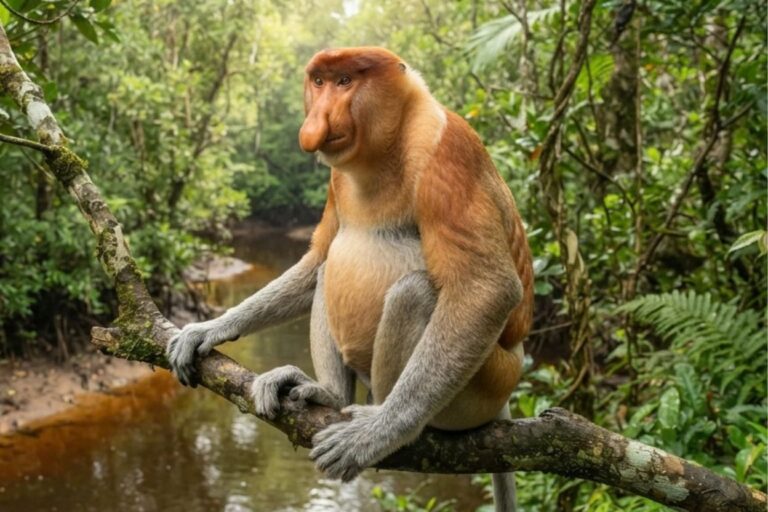
Deep within the tropical swamplands of Southeast Asia, a truly unique mammal captures the imagination. The species nasalis larvatus stands out instantly due to its extraordinary facial features and specialized ecological habits. Endemic strictly to the island of Borneo, this arboreal creature represents a masterpiece of natural selection. Biologists study nasalis larvatus to understand how unique animals adapt to challenging lowland environments. Every single troop relies heavily on intact coastal forests and winding river systems.
The Evolutionary Marvel of the Proboscis Monkey
The common name for nasalis larvatus is the proboscis monkey. This primate earned its global fame because of the massive, fleshy nose found on mature males. Unlike the small, upturned noses of females, a mature male’s nose can hang far below his mouth. Nature designed this peculiar appendage for specific evolutionary advantages.
Why the Male Nose Matters
Evolutionary scientists discovered that the oversized nose functions as an acoustic amplifier. When a dominant male sounds an alarm or territorial call, the large nasal cavity boosts the sound waves. Consequently, the loud vocalizations travel much farther across dense forest canopies. Furthermore, females actively choose mates with larger noses. This preference signals superior physical health and strong genetic fitness to potential partners.
Distinct Physical Characteristics and Dimorphism
Beyond facial features, nasalis larvatus displays extreme sexual dimorphism in overall body size. Adult males often weigh over twenty kilograms, while adult females typically range between seven and twelve kilograms. Their physical build allows them to navigate thick forest branches with surprising agility.
Coat Colors and Visual Appearance
The fur coat of nasalis larvatus showcases a brilliant brick-red or auburn shade across the upper body. In contrast, the underbelly features a clean, creamy white color. Their long tails help them maintain balance during high leaps between trees. Furthermore, their limbs display a soft gray tone that blends smoothly with riverbank shadows.
Specialized Limbs for an Aquatic Life
Swimming ability sets nasalis larvatus apart from almost every other primate species. Their fingers and toes feature partial webbing. Therefore, they glide through deep river currents with remarkable speed and confidence. This adaptation proves vital when escaping sudden threats from land predators.
Specialized Habitat Requirements in Borneo
Geographic isolation limits nasalis larvatus entirely to the island of Borneo. They inhabit Malaysia, Indonesia, and the tiny nation of Brunei. However, they never venture deep into dry interior mountains. Instead, they strictly prefer coastal mangroves, peat swamps, and riverine forests.
The Importance of Waterways
Rivers provide essential resources for survival. nasalis larvatus gathers near riverbanks every single afternoon to drink and socialize. Additionally, muddy mineral licks along the water give them essential nutrients missing from regular foliage. Staying near water also offers a quick escape route from danger.
Threats from Natural Predators
Living near water exposes nasalis larvatus to specific aquatic threats. Giant saltwater crocodiles frequently lurk beneath muddy river surfaces. Meanwhile, clouded leopards and reticulated pythons hunt them from the dense forest canopy. Quick leaps directly into deep water often save them from these dangerous predators.
Complex Digestive Anatomy and Diet
Dietary habits dictate the daily routine of nasalis larvatus. Categorized primarily as a folivore, this primate eats young leaves, shoots, and unripe fruits. However, sweet, ripe fruits cause severe and fatal gas buildup in their sensitive stomachs.
The Multi-Chambered Stomach System
Processing tough, fibrous vegetation requires specialized internal organs. nasalis larvatus utilizes a complex, multi-chambered foregut fermentation system. Friendly symbiotic bacteria inside the stomach break down tough cellulose efficiently. Consequently, nasalis larvatus develops a distinctly round, pot-bellied silhouette.
The Habit of Ruminating
Interestingly, nasalis larvatus shares a rare trait with cows and deer. They routinely bring food back up from their stomach to chew it a second time. This process, known as remastication, extracts maximum nutritional value from hard forest leaves.
Social Structure and Troop Dynamics
Social organization within populations of nasalis larvatus relies on structured, predictable hierarchies. The most common unit is the single-male harem group. Typically, one dominant male leads multiple adult females and their dependent offspring.
Bachelor Groups and Social Shifts
Young males eventually leave their natal families to form separate bachelor groups. These all-male bands travel together until they challenge a harem leader. Meanwhile, females occasionally transfer between different social troops to find better mates.
Communal Sleeping Habits
As daylight fades, troops of nasalis larvatus gather at specific sleeping trees. These trees always stand directly over water or along wide riverbanks. Sleeping above water keeps the monkeys cooler during humid nights and deters nocturnal predators.
Conservation Status and Urgent Threats
Despite official legal protections, nasalis larvatus faces severe survival challenges across its native range. The International Union for Conservation of Nature classifies nasalis larvatus as an endangered species. Population numbers have dropped drastically over the past few decades.
The Impact of Deforestation
Human activities represent the greatest threat to nasalis larvatus. Commercial logging operations clear vast areas of lowland forest every year. Furthermore, massive palm oil plantations replace natural riverine habitats. Because nasalis larvatus cannot survive far from water, land clearing traps them in isolated forest patches.
Future Protection Strategies
Saving nasalis larvatus requires aggressive conservation action and strict law enforcement. Governments must protect remaining mangrove forests from industrial expansion. Ultimately, preserving these unique primates ensures the rich biodiversity of Borneo survives for future generations.
