



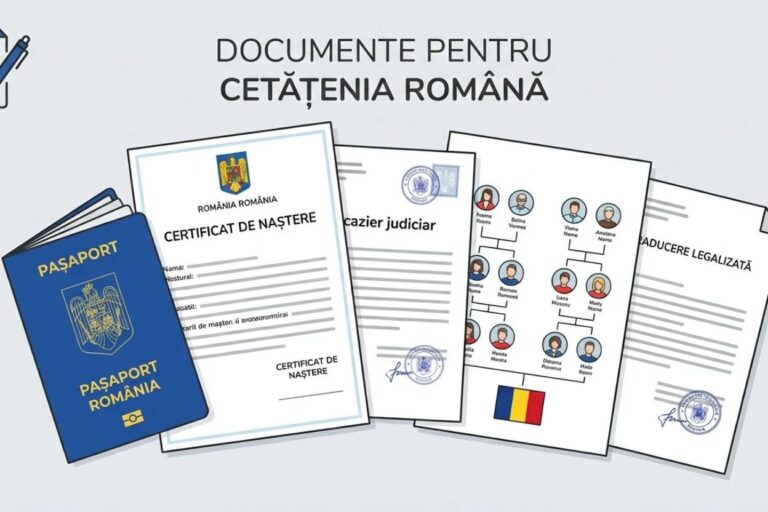
Applying for Romanian citizenship can be an important step for individuals who want to reconnect with their family heritage or establish a stronger connection with Romania. However, preparing the correct documents is one of the most important parts of the application process. Missing certificates, incorrect translations, or differences in personal details can lead to delays.
The required paperwork depends on the legal route used to apply. For example, an applicant applying through Romanian ancestry may need documents proving their family lineage, while someone applying through long-term residence may need evidence of lawful residence in Romania. Understanding these differences before submitting an application can make the process easier to manage.
Applicants who need help understanding eligibility, preparing paperwork, or organising their application may explore the information and assistance available through HAgroup.ae. Proper preparation is particularly useful when documents must be collected from several countries or legal records contain different spellings of names.
1. Romanian Citizenship Application Form
The application form is a central document in a Romanian citizenship application. Applicants must use the appropriate form for their legal route and complete the required declarations accurately.
Depending on the application category, the form may require information about:
- Full legal name and date of birth.
- Place of birth and current nationality.
- Parents and other relevant family members.
- Current address and contact details.
- Previous Romanian citizenship applications.
- The applicant’s choice regarding residence in Romania or abroad, where applicable.
Some applications require the form to be completed in front of an authorised official. Applicants should check the current submission procedure before signing or finalising their paperwork.
2. Valid Passport and Identity Documents
A valid passport is generally an essential part of the application file. It helps authorities verify the applicant’s identity, nationality, and personal details.
Depending on the relevant procedure, applicants may need to prepare:
- A valid passport and the required copies.
- A national identity card, where applicable.
- Copies of other passports if they hold multiple nationalities.
- A certified Romanian translation when required.
- Additional identity records if the passport does not contain all necessary details.
Names, dates of birth, and places of birth should match the information in the other documents. If the passport uses a different spelling from an older birth certificate, the applicant should identify and address the discrepancy before submission.
3. Birth Certificate and Civil Status Records
Birth certificates are particularly important because they establish personal identity and family relationships. The exact documents required depend on whether the application is based on residence, ancestry, restoration of citizenship, or another legal provision.
Applicants may need to provide a birth certificate or an official civil-status extract issued by the relevant authority. Some procedures require recently issued extracts, certified copies, legalisation, or an apostille.
Other civil-status documents may include:
- Marriage certificates.
- Divorce certificates or final divorce decisions.
- Death certificates relating to relevant family members.
- Official name-change records.
- Documents correcting errors in civil registers.
Applicants should not assume that an ordinary photocopy will be sufficient. The relevant authority may require an original, a certified copy, or a particular form of official extract.
4. Documents Proving Romanian Ancestry
People applying through Romanian ancestry or seeking restoration of Romanian citizenship may need to establish a documented connection to a Romanian ancestor.
This can involve collecting records from several generations. Depending on the circumstances, relevant documents may include:
- The applicant’s birth certificate.
- Birth certificates of parents and grandparents.
- Marriage certificates linking family members with different surnames.
- Romanian birth, marriage, or death records.
- Historical citizenship records or other evidence of Romanian nationality.
- Official documents explaining changes in names or places of birth.
The objective is to create a clear documentary link between the applicant and the ancestor relevant to the application. A family tree can help organise research, but it does not replace official civil-status records.
If a relative’s surname changed after marriage or a place name changed over time, supporting records may be needed to explain the difference. Applicants should also verify which generation of ancestry qualifies under the specific legal provision being used.
5. Police Clearance Certificates
A criminal record certificate may be required to establish that an applicant meets the relevant legal conditions. The exact requirements depend on the application category and the applicant’s nationality and residence history.
For certain procedures, applicants must submit a detailed criminal record certificate issued by the relevant foreign authority. Where required, the certificate must be provided in its original form, apostilled or legalised, and translated into Romanian by an authorised translator.
Applicants with multiple nationalities may need certificates from more than one country. It is therefore sensible to confirm the requirements before ordering the documents.
Check the issuing authority’s processing times and the Romanian authority’s rules concerning document validity. Obtaining a certificate too early may create problems if it becomes outdated before the application is filed.
6. Residence Documents for Applications Based on Residence
Applicants seeking Romanian citizenship through ordinary naturalisation must meet the applicable residence and other legal requirements. The documents required for this route differ from those used for ancestry-based applications.
Depending on the case, the file may include:
- A valid passport.
- A valid long-term residence permit.
- An official record confirming the period of lawful residence.
- Evidence relating to the applicant’s address and personal status.
- A criminal record certificate, where required.
- A declaration concerning compliance with Romanian law and national security requirements.
Additional evidence may be requested to demonstrate that the applicant satisfies the applicable legal conditions. Applicants should check the current rules rather than relying on a checklist prepared for a different citizenship route.
7. Documents for a Spouse or Minor Children
Family circumstances can affect the supporting documents needed for an application. A spouse’s citizenship does not automatically mean that the other spouse qualifies for Romanian citizenship, and the relevant legal requirements must still be satisfied.
Where a spouse’s Romanian citizenship is relevant, an applicant may need to provide a marriage certificate and evidence of the spouse’s nationality.
If minor children are included in or connected with an application, additional documents may be required, such as:
- Each child’s birth certificate.
- Passports or identity documents.
- Evidence of the child’s residence status, where applicable.
- Parental consent or other required declarations.
- The child’s consent where the applicable rules require it.
The requirements may differ according to the child’s age, the legal basis of the application, and whether both parents are involved. Families should verify the requirements for every applicant rather than assuming that one adult’s document checklist covers everyone.
8. Translation, Apostille, and Legalisation Requirements
Applicants often collect documents from countries that use different languages and legal systems. A document that is valid in its country of issue may still need additional formalities before Romanian authorities can accept it.
Certified Romanian translations
Foreign-language documents may need to be translated into Romanian. Depending on the procedure, the translation may need to be certified or legalised. Applicants should use a translator or service that meets the relevant requirements.
Apostille or consular legalisation
An apostille authenticates the origin of a public document for use in another country under the applicable international arrangements. Where an apostille is not the appropriate procedure, consular legalisation or another accepted form of authentication may be necessary.
Not every document follows the same rules. Certain multilingual civil-status extracts may qualify for different treatment, while bilateral agreements may affect authentication requirements.
For official guidance, applicants should consult the Romanian National Authority for Citizenship’s published document requirements. This official list explains that the documents required vary according to the relevant provision of Romanian citizenship law.
9. Common Document Preparation Mistakes to Avoid
Even applicants who qualify for citizenship can experience delays if their paperwork is incomplete or inconsistent. Reviewing the file carefully before submission can help reduce avoidable problems.
Common mistakes include:
- Submitting photocopies when originals or certified copies are required.
- Using outdated civil-status extracts.
- Forgetting apostilles or legalisation where applicable.
- Providing translations that do not meet the required standards.
- Leaving unexplained differences in names, dates, or places of birth.
- Omitting documents relating to a spouse, child, or ancestor.
- Following a checklist intended for a different application category.
- Assuming that document collection alone guarantees approval.
A practical approach is to prepare a separate checklist for each applicant, mark which documents have been obtained, and identify which still require translation, authentication, or correction.
10. How to Prepare Before Submitting the Application
Before submitting a Romanian citizenship application, first establish which legal route applies to your circumstances. Then obtain the corresponding official checklist and compare it with the documents already available.
Next, check the issue dates and validity requirements of certificates, arrange translations and authentication, and resolve inconsistencies in personal or family records. Keep digital copies of the documents and organise originals separately so that you can identify missing items quickly.
If your case involves several countries, historical records, multiple nationalities, or complicated family relationships, consider obtaining qualified assistance to help organise the paperwork. However, remember that professional assistance does not guarantee approval, and the final decision rests with the competent Romanian authorities.
Conclusion
The documents required for a Romanian citizenship application depend on the legal route, personal circumstances, and supporting evidence available. Passports, birth certificates, criminal record certificates, residence documents, ancestry records, and family documents may all be relevant, but not every applicant needs every item.
The best starting point is to identify the correct application category and follow its current official checklist. By checking document validity, translations, authentication, and personal details before submission, applicants can prepare a more complete and organised application.
