



Choosing an energy supplier can have a lasting impact on household expenses, customer service, and the flexibility you have over your energy bills. Yet many UK households stay with the same provider for years, often because switching seems complicated or they are unsure whether changing suppliers will disrupt their gas or electricity supply.
The good news is that switching is usually straightforward. If you pay your household energy bills directly, you can generally choose a different supplier or tariff, compare available deals, and arrange the move online or by phone. Your new supplier handles most of the process, while your existing gas and electricity connections remain in place.
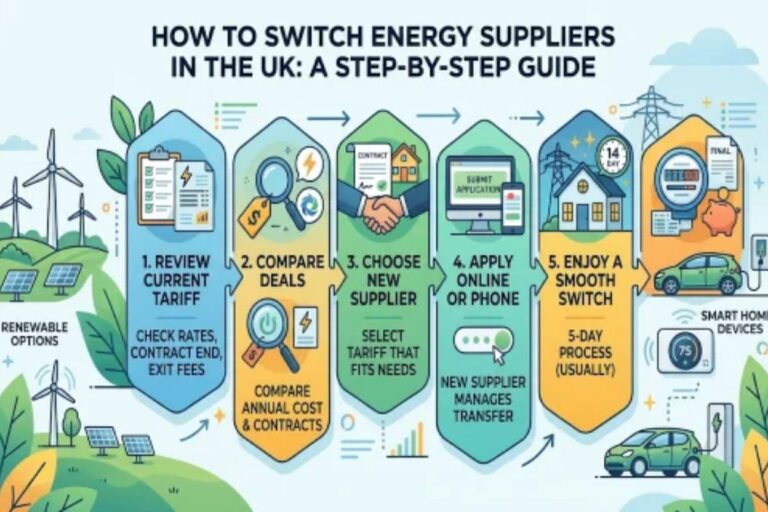
The key is to look beyond an attractive headline price. Understanding your current tariff, checking your annual consumption, and comparing contract terms can help you make a better-informed decision. Here is how to switch energy suppliers in the UK, step by step.
1. Review Your Current Energy Tariff
Before comparing suppliers, establish exactly what you currently pay. Your latest energy bill or online account should show your supplier, tariff name, electricity and gas unit rates, standing charges, and annual energy consumption.
Unit rates determine how much you pay for each kilowatt-hour (kWh) of energy used. Standing charges are daily fees that apply regardless of consumption. Both figures matter when comparing tariffs because a low unit rate can be offset by higher standing charges.
Check whether you have a standard variable tariff or a fixed-rate contract. Variable rates can change in line with the supplier’s pricing arrangements and applicable price-cap rules. Fixed tariffs generally lock in the unit rates and standing charges specified by the contract for a set period, although your total bill still depends on how much energy you use.
If you have a fixed contract, check its end date and any early exit fees before switching. Under Citizens Advice guidance, domestic customers can generally leave a fixed tariff without an exit fee during the final 49 days of the contract. Leaving earlier may incur a charge, depending on the terms.
This initial review establishes your starting point and helps you judge whether a proposed deal offers genuine savings.
2. Compare Energy Suppliers and Available Deals
Once you understand your existing tariff, compare alternatives using your postcode and actual annual consumption. You can use an energy comparison service or visit suppliers directly to explore their offers.
Start by comparing the estimated annual cost of each tariff rather than relying on monthly direct debit amounts. Suppliers calculate monthly payments differently, and a low payment can sometimes reflect an unrealistic estimate of your consumption rather than a cheaper deal.
Consider the following factors when assessing your options:
Annual cost: Estimate what you would pay over a full year based on your household’s typical electricity and gas usage.
Contract length: Decide whether you prefer the predictability of a fixed tariff or the flexibility of a variable arrangement.
Exit fees: Check whether leaving the contract early would cost money, both with your current supplier and any prospective provider.
Customer service: Review complaint records, contact options, billing support, and independent customer satisfaction information.
Payment methods: Confirm whether the tariff requires direct debit, a smart meter, or another specific payment arrangement.
When narrowing down your options, pay attention to the differences between the actual tariffs on offer, not just the names of the companies. An Octopus Energy and E.ON Next compared review can help you understand how their contracts, account features, and customer support options differ. Use those details alongside your own consumption figures to establish whether a new deal is worth pursuing.
Remember that the cheapest tariff is not necessarily the most suitable. A household with electric heating may value competitive electricity rates, while someone who prefers predictable bills may prioritise a fixed contract with clear terms.
3. Choose the Supplier That Fits Your Needs
After comparing available deals, shortlist the tariffs that meet your financial and practical requirements. Read the full tariff details before committing, paying particular attention to the rates, standing charges, contract duration, and conditions attached to the offer.
Consider how your household uses energy throughout the day. If you have an electric vehicle, a battery, or a heat pump, a time-of-use tariff may be worth investigating. These tariffs can offer different prices at different times, potentially rewarding households that can shift some consumption to cheaper periods.
Smart-meter compatibility is another important consideration. Many tariffs rely on smart-meter readings or require a particular meter configuration. If you already have a smart meter, ask whether it will continue operating in smart mode after the switch. If you use a traditional meter or a prepayment arrangement, confirm that the new tariff supports your setup.
Check eligibility for benefits you currently receive, including any applicable supplier support schemes. If you rely on the Priority Services Register or other additional assistance, confirm how your new supplier will maintain that support.
Take time to read the contract summary and any conditions that might affect your expected savings. A few minutes of careful checking can prevent an inconvenient or expensive decision later.
4. Apply to Your New Energy Supplier
When you have selected a tariff, apply through the supplier’s website, by telephone, or through the comparison service offering the deal. You generally do not need to contact your existing supplier to initiate the switch because your new provider coordinates the process.
You will usually need your postcode, full address, current supplier’s name, current tariff details, and an estimate of your annual gas and electricity consumption. Your latest bill is useful because it contains much of this information.
Depending on the property and tariff, you may also be asked for meter information or details about how you pay for energy.
Review the information carefully before confirming your application. Check that the selected tariff covers the correct supplies, particularly if you are switching both gas and electricity. You can sometimes move one fuel without moving the other, so make sure the arrangement matches your intentions.
Once you agree to the contract, your new supplier should confirm the details and explain the expected switching date. Keep the confirmation email or letter for reference, especially if you need to resolve a billing question later.
5. Understand the Switching Timeline
For most domestic customers in Great Britain, a supplier switch is designed to be completed within five working days once the relevant switching process is underway. Your new supplier should tell you when the change is expected to take place.
You also have a 14-day cooling-off period for a domestic energy contract. This gives you time to reconsider your decision and cancel the switch if you change your mind. Contact your new supplier promptly if you decide not to proceed.
During the switch, your gas and electricity supply should continue without interruption. You do not normally need a home visit or new pipes and cables because the change concerns the company responsible for billing and supplying your energy, not the physical network.
If your switch appears delayed, contact the new supplier to check the status of your application. Ofgem’s domestic switching protections include compensation where a supplier fails to complete a switch within the required timeframe, subject to the applicable rules.
Do not assume that an application confirmation means the switch has already completed. Wait for confirmation of the actual transfer date before treating your new tariff as active.
6. Take Meter Readings and Check Your Final Bill
On the day your switch takes place, record your electricity and gas meter readings where applicable. Submit them to your new supplier as instructed and keep a photograph or written record for your files.
Accurate readings help ensure that your old supplier bills you for energy used before the transfer, while your new supplier starts billing from the appropriate point. If you have a smart meter, readings may be transmitted automatically, but it is still sensible to follow the supplier’s instructions.
Your previous supplier will issue a final bill after the switch. Check the dates, readings, unit rates, standing charges, and any remaining balance. If you were paying by direct debit, remember that the final account may include a payment or refund depending on your usage and previous payments.
If your old account has a credit balance, your supplier should return the money owed in accordance with the applicable rules. Citizens Advice explains that domestic suppliers generally must refund credit within 10 working days of sending the final bill.
Keep your final bill and switching confirmation until the account has been settled. If the figures appear incorrect, contact the relevant supplier and provide your recorded readings and supporting evidence.
7. Know What to Do If Something Goes Wrong
Although most domestic switches proceed smoothly, problems can occur. You might receive an unexpected final bill, discover that a meter is not communicating properly, or find that the new tariff differs from the one you selected.
Start by contacting your new supplier if the switch itself is delayed or the agreed tariff has not been applied. Contact your previous supplier if the dispute concerns the final bill or an outstanding credit balance. Provide dates, account references, meter readings, and copies of relevant correspondence.
If the issue remains unresolved, follow the supplier’s formal complaints process. You can also seek independent guidance from Citizens Advice or consult Ofgem’s information on switching rights and compensation.
Households with outstanding energy debt should check the rules before applying. In some circumstances, domestic customers can switch when a debt has been outstanding for less than 28 days, or when qualifying prepayment-meter debt falls within the permitted limits. Other circumstances may prevent a switch until the debt is addressed.
Renters should also establish who is responsible for paying the energy bills. If the landlord pays the supplier directly, the tenant may not be able to arrange the switch independently. Check the tenancy agreement and discuss the proposed change with the landlord where necessary.
Make Your Next Energy Switch With Confidence
Switching energy suppliers does not need to be a complicated task. Start by reviewing your current tariff, compare realistic annual costs, and check the contract terms before selecting a new provider. Once you apply, your new supplier will generally manage the transfer, leaving you to record your meter readings and check the final bill.
The most effective approach is to review your energy arrangements periodically rather than waiting for a substantial price increase. Tariffs and household needs change, so a deal that suited you last year may no longer represent good value.
Before committing, verify the latest rates directly with the supplier, check any exit fees, and make sure the tariff works with your meter and payment arrangements. A careful comparison can help you reduce unnecessary costs while choosing an energy service that suits your household over the long term.
