



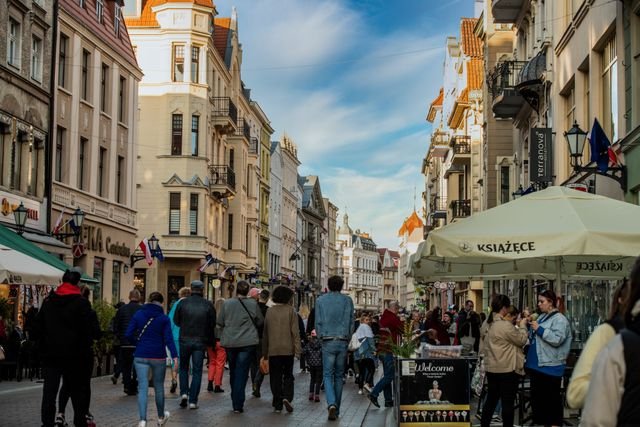
Poland rewards travellers who resist the temptation to fit the entire country into one holiday. Warsaw, Kraków and Gdańsk may look relatively close together on a map of Europe, but each deserves enough time to be experienced beyond its railway station and main square. Add Wrocław, the Baltic coast, the Tatra Mountains, medieval castles and smaller historic towns, and an ambitious itinerary can quickly become a sequence of transfers rather than a holiday. A better first trip begins with priorities. Decide what you most want to understand about Poland, choose a small number of bases and then build the route around realistic travel times. For many visitors, two or three regions explored properly will provide a richer introduction than six cities visited in eight days.
Start with the number of full days you actually have
There is an important difference between a ten-day holiday and ten full days in Poland. Arrival and departure days may offer only a few usable hours, particularly after a long-haul flight. Changing hotels also consumes more time than the train or driving time shown on a route planner.
Start by counting the days that can genuinely be used for sightseeing. Then subtract the major transfer periods. What remains is the real framework for the itinerary.
This simple calculation often changes the route. A traveller who initially plans Warsaw, Gdańsk, Wrocław, Kraków and Zakopane may discover that much of the holiday would be spent packing, checking out, reaching stations and checking in again.
That does not mean travelling around Poland is difficult. It means that good itineraries account for the hidden time surrounding every move.
Choose two or three anchors for the trip
Rather than starting with a list of attractions, choose the main geographical anchors of the journey. On a first visit, Warsaw and Kraków are obvious candidates, but they offer very different perspectives.
Warsaw is the contemporary capital and a city whose urban landscape reflects destruction, reconstruction and modern development. Kraków offers a different experience, with a historic centre that survived the Second World War relatively intact and a strong concentration of major cultural sites.
Gdańsk can introduce another dimension. Its Baltic setting, maritime history and distinctive architecture make northern Poland feel markedly different from the south and centre of the country.
Wrocław, Poznań, Toruń and other cities can all justify a place in an itinerary, but the objective should not be to collect city names. Each additional base needs to add enough to the journey to justify the time required to reach it.
Think in regions, not just cities
One of the easiest mistakes when planning Poland is treating the country as a collection of city breaks. Many of its most interesting experiences sit between or beyond the major urban centres.
A stay in Kraków can be combined with excursions into Małopolska and the surrounding region. From Gdańsk, the wider Baltic coast and Pomerania become accessible. A southern itinerary can introduce the mountain landscapes of the Tatras or Pieniny, while other parts of Poland offer lakes, forests, castles, rural landscapes and smaller historic towns.
Thinking regionally changes the structure of the holiday. Instead of sleeping in a different place every night, travellers can establish a base and explore from it.
That can reduce luggage handling and hotel changes while creating room for places that would never appear on a simple checklist of Poland’s largest cities.
Give Warsaw enough time to make sense
Warsaw is sometimes treated as an arrival point before travellers immediately continue to Kraków. That can mean missing one of the country’s most important stories.
The Polish capital requires context. Its Old Town is historic in appearance but also represents an extraordinary reconstruction after the destruction of the Second World War. Elsewhere, different periods of the city’s development sit alongside each other: royal Warsaw, nineteenth-century districts, twentieth-century history and a modern European capital.
For a first visit, it is worth leaving enough time to understand those layers rather than walking through the Old Town and moving on.
Warsaw can also work well at the beginning of a journey. Travellers arriving by air can settle into the country before continuing by rail or road, rather than adding another transfer immediately after their flight.
Kraków works best when you do not overload it
Kraków has the opposite planning problem. There is so much to see in and around the city that visitors often try to fit too much into each day.
The historic centre, Wawel area and Kazimierz can already fill a substantial part of a short stay. Kraków is also used as a base for major excursions, which means a nominal three-night stay can contain surprisingly little time in Kraków itself.
Before adding day trips, decide how much of the city you actually want to experience. A tightly scheduled visit may allow you to see the principal landmarks, but it leaves less time for museums, neighbourhoods, restaurants or simply walking without a timetable.
If Kraków is one of the main reasons for travelling to Poland, allocating an additional night can sometimes improve the whole itinerary more than adding another destination.
Decide whether Gdańsk belongs in the same trip
Gdańsk adds geographical and cultural variety, particularly for travellers interested in maritime and modern European history. Together with neighbouring Sopot and Gdynia, it can also form part of a broader stay on the Baltic coast.
The question is whether the north fits the available time.
For a longer journey, Warsaw, Gdańsk and Kraków can form three strong anchors. For a much shorter holiday, including all three may create more movement than some travellers want.
There is no universal answer because pace is personal. Someone comfortable with early trains and structured sightseeing may happily cover more ground. Another traveller may prefer three or four nights in each place and fewer transfers.
Good itinerary design reflects that difference instead of assuming that every traveller should follow the same route.
Use travel time as a design constraint
Transport should shape an itinerary before accommodation is booked.
Poland’s main cities have useful rail connections, making trains an obvious option for many city-to-city journeys. A rental car can become more valuable when the itinerary moves into rural areas or combines smaller destinations that are inconvenient to connect by public transport. Private transfers can solve different problems, particularly for groups or routes involving several stops.
The right choice can therefore change during the same holiday. A traveller might use trains between major cities, join an organised excursion for a particular destination and use a private transfer where public transport would make the day unnecessarily complicated.
This is more efficient than deciding in advance that the entire trip must be completed by one mode of transport.
Do not treat every transfer as a lost day
Transfers can become part of the itinerary when the route is designed carefully.
Suppose the journey moves from one major city to another but passes through an area worth exploring. Depending on the transport arrangement, a stop on the way may be more efficient than travelling directly to the next hotel and making a separate return excursion later.
This is where local route knowledge becomes particularly valuable. The question is no longer simply, “How do I get from A to B?” but, “What is worth seeing between A and B, and does stopping there improve the journey?”
A well-designed poland tour can solve exactly this type of problem. Poland Tour Team operates as a local incoming tour operator and builds tailor-made itineraries around travellers’ interests, pace and budget, with arrangements that can include transport, accommodation, guides and attraction visits. For visitors trying to combine several Polish regions, that kind of planning can be particularly useful when the most interesting route is not simply the shortest route between major cities.
The value of local planning is therefore not just having someone make reservations. It is being able to design the sequence of the trip around geography, interests and realistic travel time.
Add contrast rather than another similar destination
When deciding whether to add another stop, ask what it contributes that the itinerary does not already contain.
If several days are already devoted to historic city centres, another city may be less valuable than time in the mountains, on the Baltic coast or in a smaller town. Conversely, an itinerary focused heavily on outdoor activities may benefit from a few days in Kraków or Warsaw.
This idea of contrast can make a relatively short journey feel much broader. Architecture, landscapes, food traditions and local history vary significantly between Polish regions.
It also prevents a common travel-planning problem: adding destinations because they are famous rather than because they improve the particular trip being planned.
Leave room for Poland beyond the headline attractions
Famous landmarks have earned their reputation, but a memorable itinerary should not depend exclusively on them.
Smaller towns, local food, markets, neighbourhood walks and regional landscapes can provide the connective tissue between major attractions. They also give travellers opportunities to experience places without moving through a sequence of timed admissions.
This does not mean deliberately avoiding popular sites. On a first trip, there is nothing wrong with wanting to see Poland’s best-known landmarks. The more useful approach is to balance them with experiences that reveal something about the region surrounding them.
A morning at a major museum and an afternoon in a less-visited neighbourhood can coexist perfectly well. So can a famous historic city and a day spent walking in the countryside.
Be realistic about day trips
Day trips are useful because they allow travellers to see more without changing hotels, but they are not free additions to an itinerary.
A destination that appears to require only an hour or two of travel may still consume most of a day once transfers, waiting time, meals and sightseeing are included. Two major excursions from a three-night base can therefore leave surprisingly little time for the base city itself.
Before adding a day trip, ask three questions. How much total travel does it involve? How much time does the destination deserve? What are you giving up in the city where you are staying?
If the answers still make sense, the excursion probably belongs in the itinerary. If not, saving it for another journey can improve the trip you are taking now.
Match the pace to the people travelling
A good route for a solo traveller in their twenties may be a poor route for a multigenerational family. The destinations can be identical while the appropriate pace is completely different.
Consider walking distances, early departures, luggage, accessibility and how frequently the group is comfortable changing hotels. Families may need more flexibility around meals and rest. Travellers with a strong interest in history may want several hours in museums that other visitors would prefer to spend outdoors.
There should also be some unallocated time. A schedule with no margin is vulnerable to a delayed train, bad weather or simply discovering somewhere worth staying longer.
Tailor-made travel is useful precisely because pace is not an objective measurement. The right itinerary is the one that works for the people actually taking it.
Treat difficult historical sites with the time they deserve
Poland’s twentieth-century history means some journeys include places associated with war, occupation and the Holocaust. These should not be treated as interchangeable sightseeing stops or squeezed casually between unrelated attractions.
Travellers should understand what they are visiting, allow sufficient time and approach memorial sites with appropriate respect. Practical planning matters here too: adding an emotionally demanding visit to an already overloaded day may not produce a good experience.
The same principle applies more broadly to museums and heritage sites. Not every important place needs to be visited on the same journey.
Choosing fewer places and engaging with them properly can be more meaningful than completing a longer checklist.
Consider season before finalising the route
A route that works beautifully in one part of the year may need adjustment in another.
Daylight hours, weather and visitor numbers influence how much can realistically be done. Mountain activities require different planning from urban sightseeing, while coastal destinations have their own seasonal rhythm.
Opening hours and transport schedules can also vary, particularly outside major cities. These practical details should be checked for the actual travel dates rather than assumed from a generic itinerary found online.
Season can also be used positively. Instead of asking only whether a particular month is a “good time to visit Poland”, consider which parts of Poland and which activities make the most sense at that time.
That produces a much more useful answer.
Build flexibility into the itinerary
The best travel plans are structured without becoming rigid.
Major transfers, popular attractions and important guided visits may need to be fixed in advance. Other parts of the day can remain flexible. This creates room for weather changes, spontaneous discoveries or simply slowing down.
A useful technique is to separate plans into three categories: essential, desirable and optional. Essential elements receive fixed time. Desirable activities are fitted around them. Optional ideas provide alternatives if circumstances change.
This prevents the holiday from becoming a project-management exercise while still protecting the experiences that matter most.
What might a balanced first trip look like?
There is no single ideal itinerary, but a useful framework is easier to create once priorities have been established.
On a shorter trip, two principal bases can be enough. Warsaw and Kraków, for example, provide very different introductions to Poland while keeping the number of major transfers low. Depending on interests, an excursion or regional experience can then be added from either base.
With more time, a third region becomes realistic. Northern Poland around Gdańsk introduces the Baltic dimension, while southern landscapes can create a city-and-nature combination.
Longer journeys allow the route to become more thematic. Travellers might concentrate on heritage, food, cycling, religious history, architecture or family roots rather than trying to assemble a standard list of attractions.
The important part is that the route has a reason for taking its particular shape.
A good Poland itinerary is selective
Planning a first trip to Poland is ultimately an exercise in choosing what to leave out.
That can feel counterintuitive when every guide introduces another castle, museum, historic town or landscape worth seeing. Yet a holiday becomes more enjoyable when destinations have enough time to become places rather than stops.
Start with the experiences that matter most. Choose a limited number of bases, calculate transfers realistically and use day trips selectively. Add contrast between cities, landscapes and regional experiences rather than collecting destinations for their own sake.
Poland is large and varied enough that a first journey does not need to be a final one. Leaving something for the next visit is not a planning failure. In many cases, it is the decision that makes the first trip work.
